
USDA Loan Eligibility in California: Where the Map Reaches and Who Fits the Income Test
How USDA's rural map and household income test work in California, why towns near big metros can still be eligible, and how to check an address.
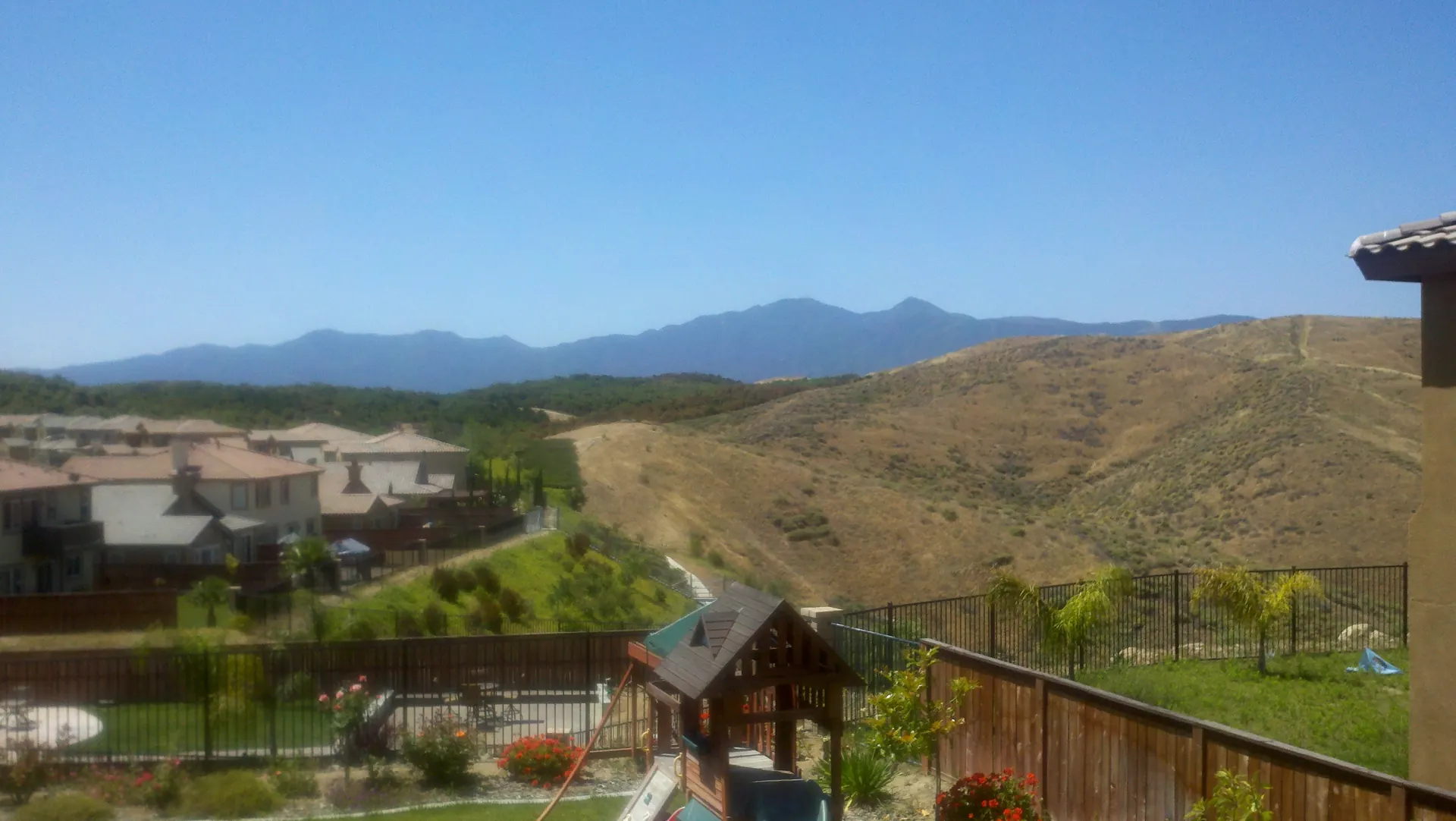
Say you're renting in Sacramento, your lease is up in the spring, and the houses that fit your budget are forty minutes out, in a foothill town or past the last subdivision at the edge of the valley. A coworker mentions a USDA loan. You picture farmland and a tractor, and you drop the idea because you don't plan on raising anything but a dog.
That's the most common way California buyers talk themselves out of this program. USDA's Single Family Housing Guaranteed Loan Program is a home loan, not a farm loan, and its idea of "rural" comes from a federal statute and a map rather than from what a town looks like from the freeway. In a state with big metros and long commutes, a good share of the eligible ground sits right at the edges of those metros.
I've been in this business since 1988, and USDA is the program I most often see buyers rule out before they've checked a single address. Here's how eligibility works in California, and how to find out in a few minutes whether the house you like is inside it.
Key takeaways
- USDA's guaranteed loan is for a primary residence in an eligible area, bought by a household whose income is at or below 115% of the area median, according to USDA Rural Development.
- USDA states that no down payment is required for borrowers who qualify under this program.
- "Rural" is defined in federal law, 42 U.S.C. §1490, and it reaches towns of up to 20,000 people under some conditions, plus some towns of up to 35,000 that keep their status until 2030 census data arrives.
- The income test counts every adult who lives in the home, including people who won't be on the loan.
- The address decides it. USDA's eligibility map gives you the answer for a specific property in about a minute.
Two tests, and neither one is about farming
A USDA guaranteed loan has to clear two eligibility tests before ordinary underwriting begins. The property has to sit in an eligible area, and the household has to come in under the income limit for that county and household size. USDA's program page adds two more conditions: the home must be your primary residence (it can't be a rental or other income-producing property), and you must be a U.S. citizen, a U.S. non-citizen national or a qualified alien.
USDA doesn't lend the money on this program. A private lender makes the loan and USDA guarantees it, and that guarantee is what allows the no-down-payment structure for a borrower who qualifies. Interest rates are set by each lender, so they vary from one lender to the next.
What "rural" means under the law
The definition lives in 42 U.S.C. §1490, and it's more generous than the word suggests. To be eligible, a place can't be part of or associated with an urban area, and it has to fit one of these population tiers:
| Population | When it counts as rural |
|---|---|
| Up to 2,500 | On population alone |
| Over 2,500, up to 10,000 | When it's rural in character |
| Over 10,000, up to 20,000 | When it sits outside a metropolitan statistical area and has a serious lack of mortgage credit for lower- and moderate-income families |
| Over 10,000, up to 35,000 | When it was treated as rural at any point from 2000 through 2020, it stays rural until data from the 2030 census is received |
That last tier matters in California. Plenty of towns that grew over the last two census counts are still on the map because of it, and they'll stay there until the 2030 numbers come in. The flip side is that the map will be redrawn after 2030, so a town that's eligible in 2026 may not be later.
Where eligible areas tend to show up in California
California's map follows the shape of its metros. The coastal cities, the large inland metros and the suburbs that run continuously out from them are mostly ineligible. What's left is a lot of the state:
- Small towns and unincorporated areas in the Central Valley, between the larger cities along Highway 99 and Interstate 5
- Communities in the Sierra Nevada foothills
- The high desert and much of the desert interior outside its larger cities
- The outer edges of the Inland Empire, where newer tracts meet open hills
- The far northern counties, the North Coast and the inland valleys behind the Central Coast
Treat that list as a pattern, since the boundaries follow census lines. They can run through a town's outskirts, and two homes a few minutes apart can land on opposite sides. A newer subdivision at the edge of a growing city may also fall outside a boundary that still covers older streets farther out.
How to check an address
USDA runs an Income and Property Eligibility Site with two tools: a property eligibility map and an income calculator. On the property side, pick the Single Family Housing Guaranteed program and enter the full street address. The site tells you whether that property is in an eligible area.
Do this before you fall for a house, not after. If you're shopping a whole town, check several addresses across it, because a town can be partly in and partly out. We run the same check at the start of every USDA conversation, so you know where you stand before you write an offer.
The income test counts the whole household
USDA's limit is 115% of the median household income for the area, and it scales with county and household size. The calculation catches people off guard because two different incomes are in play.
For eligibility, USDA counts the annual income of every adult in the household, not only the people signing the note. It then subtracts allowed deductions to reach adjusted annual income. USDA's training material lists $480 for each dependent, a flat deduction for an elderly family when an applicant is 62 or older, child care for children 12 and under when it lets a household member work or attend school, and certain medical and disability expenses above 3% of annual income.
For qualifying, only the borrowers' income counts.
Here's how that plays out. Say you're buying with your spouse, and your 24-year-old son lives with you and works full time. His paycheck counts toward the household limit even though he isn't on the loan, and it does nothing to help you qualify. In a multigenerational household, that's the first thing I check.
The limits change every year. USDA published its 2026 limits on July 13, 2026, and updated its automated underwriting system and the online income calculator to match. Because the limit tracks each county's median, it's worth running the calculator even if you'd never describe your household as low income.
Qualifying once you're eligible
Clearing both tests gets you to underwriting, where a USDA file is reviewed under USDA's handbook, HB-1-3555, much like any other loan file.
Debt ratios. USDA's baseline ratios are 29% of gross monthly income for the housing payment, including taxes and insurance, and 41% for total monthly debt, as summarized in the FDIC's guide to the program. Our post on debt-to-income ratios walks through how each side of that is calculated.
Credit. USDA's handbook lets a borrower with no credit score build a history from non-traditional tradelines such as rent payments, and it says plainly that using non-traditional credit is not a reason to deny a loan. Lenders can add their own requirements on top of USDA's, which is one reason two lenders can read the same file differently. Our post on what underwriters look at covers the rest of the review.
Loan size. The FDIC's summary notes that loan limits do not apply to the guaranteed program. What caps the loan is the household income limit and what the debt ratios support.
The property. An existing home has to meet USDA's minimum property standards, and new construction has to meet an acceptable building code. USDA puts no restriction on size or design.
Costs. USDA charges an upfront guarantee fee and an annual fee on these loans, and both show up on your Loan Estimate. USDA also allows reasonable, customary closing costs to be included in the loan.
When USDA isn't the right fit
Your household is over the limit, or the address is outside the map. FHA and conventional loans have no location or income test. Our post on FHA loan benefits compares the two.
Your income is well below the limit. USDA runs a separate Direct Home Loan program for low- and very-low-income applicants in eligible areas. It comes with payment assistance, a subsidy that temporarily lowers the monthly payment based on adjusted family income, and USDA requires some or all of it to be repaid when the home is sold or you move out. Applications go through your local USDA Rural Development office rather than a private lender.
You're a veteran. VA financing also requires no down payment, and it has no location test or household income cap. See our overview of VA loan benefits.
You want to refinance. USDA allows refinancing only for loans that are already USDA guaranteed or direct loans. A conventional or FHA loan can't be refinanced into the program.
Common questions
Is a USDA loan only for farms or rural land?
No. The guaranteed program finances a home you live in as your primary residence, and USDA says it cannot be an income-producing property. A working farm doesn't fit, and neither does a house you plan to rent out.
Can I use a USDA loan in a California suburb?
Sometimes. Federal law counts towns of up to 20,000 people under certain conditions, and some towns of up to 35,000 keep their rural status until 2030 census data arrives. The outer edges of several California metros fall inside the map. Check the exact address on USDA's eligibility site.
Does my adult child's income count toward the USDA limit?
Yes, if they live in the home. USDA counts the annual income of every adult household member toward the 115% limit, even someone who isn't on the loan. Only the borrowers' income is used to qualify.
Is there a USDA loan limit in California?
The guaranteed program has no set loan limit. The amount is capped by your household's income limit and by what USDA's debt ratios allow.
Find out where your address stands
If you've got a town or a specific house in mind, send it to us and we'll run both eligibility checks with you before you go any further. For the program basics, see our USDA loan program page, and when you're ready, contact us to start.
Sources
- USDA Rural Development: Single Family Housing Guaranteed Loan Program retrieved 2026-10-30
- 42 U.S.C. §1490, "Rural" and "rural area" defined (Cornell LII) retrieved 2026-10-30
- USDA Rural Development bulletin: Updated Income Limits for 2026 (July 16, 2026) retrieved 2026-10-30
- USDA Rural Development: Adjusted Annual Income training notes retrieved 2026-10-30
- USDA HB-1-3555 Chapter 10: Credit Analysis retrieved 2026-10-30
- FDIC Affordable Mortgage Lending Guide: Single Family Housing Guaranteed Loan Program retrieved 2026-10-30
- USDA Rural Development: Single Family Housing Direct Home Loans retrieved 2026-10-30
National One Mortgage Corp — NMLS #246740 · California DRE #01129578
Responsible broker: Jeff Maas · NMLS #246684 · DRE #00981576
Author: Jeff Maas · NMLS #246684
Licensed in CA, AZ, TX, FL, OK, AL, SC, TN. NMLS Consumer Access
Equal Housing Opportunity.
This page is educational and is not a commitment to lend, a rate quote, an approval, or a qualification decision.